

Stories
Whisky is a passion to explore. From the history of the spirit to the evolution of the industry, the story of whisky helps fuel that passion. Often, it’s easy to forget that whisky is also a global multibillion dollar industry. The stories of whisky — from news and new releases to in-depth inquires and what goes on behind the label — blend together to help us appreciate the spirit of whisky.
The Week’s Whisky News Roundup
Your consumer-focused roundup of what’s happening in the world of whisky — and what it means for your glass and your wallet.
Scotch Is Disappearing From American Shelves — Here’s What’s Gone
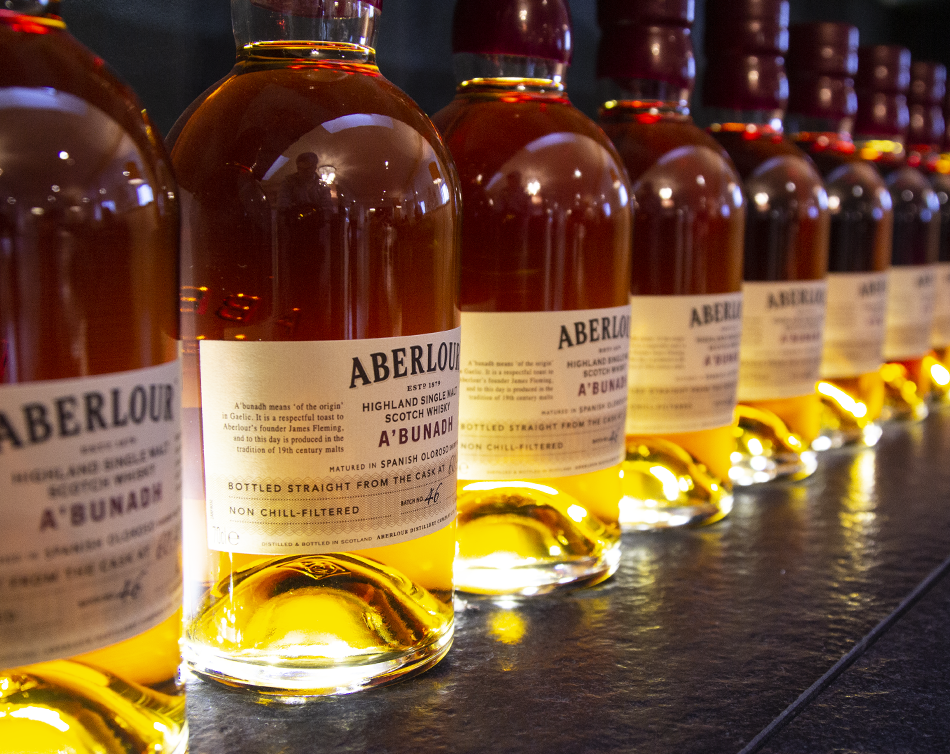
If you’ve noticed some of your favorite Scotch bottles going missing from the specialty store, you’re not imagining it. According to Barrel Standard, this April marks the approximate month when the last allocated cases of several confirmed-discontinued or paused expressions clear US distribution. We’re talking about Compass Box’s The Spice Tree and The Story of the Spaniard, both cut from the core lineup in 2024 to make room for newer releases. Compass Box’s annual Hedonism release is also cycling out of its 2026 allocation window, and the Spey single malt from the original Speyside Distillery at Kingussie — which went silent in May 2025 and sold to new owner Glasgow Whisky — is clearing its final US inventory.
On top of those, Diageo has Teaninich Flora & Fauna 10 distribution drying up after production at the distillery was paused through at least June, and independently bottled expressions from Chapter 7 (Scotland’s liquidated independent bottler) are gone for good after the company filed for insolvency in October 2025. The cumulative effect: the specialty Scotch section in your local store is about to look noticeably thinner.
What this means for you: If you’re a fan of any of these expressions, now is the time to hunt remaining bottles. Some, like Teaninich, may return eventually. Others, like the original Spey or Chapter 7 releases, are genuinely finite.
The Tariff Squeeze: Scotch Is Costing the Industry £4M a Week
The 10% US tariff on Scotch whisky — in place since April 2025 and, as of February 2026, now running alongside a broader 15% global tariff — is doing serious damage. The Scotch Whisky Association reports that US shipments fell 15% by volume between May and December 2025. That tariff is costing the Scotch industry approximately £4 million every single week, per SWA data.
For consumers, the downstream effect is already starting to show. According to an industry analysis by the Wine & Spirits Wholesalers of America, a $1.92 tariff at the port on a 750ml bottle of Scotch can snowball into a $12+ price increase per bottle at a bar once margins and taxes are applied — roughly $1 extra per drink. Irish whiskey and Welsh whisky face similar pressures under a separate 15% EU tariff structure, with Penderyn CEO Stephen Davies publicly warning the tariffs “threaten jobs, investment, and the revival of the UK’s craft distilling sector.” As one industry executive put it plainly: “If these tariffs stay in place, they will make their way to the consumer.”
What this means for you: Expect continued price creep on imported Scotch and Irish whiskey at bars and restaurants, especially in the mid-shelf range. Retail may lag behind on price increases longer, but it’s coming.
Bourbon Is Officially in a Hangover — and the Data Proves It
The bourbon boom is over, at least for now. Reuters reported this month that Kentucky whiskey exports dropped 15% in 2025 (on top of a 26% decline from 2018 tariffs), domestic US whiskey sales fell around 4% in the first nine months of 2024, and barrel inventories have hit a record 16.1 million barrels aging in Kentucky — a 57% increase since 2020. Jim Beam is cutting production this year, Heaven Hill is pacing back output, and smaller players like Lofted Spirits have pivoted to rum just to keep fermenters busy.
The drivers? Younger consumers (Gen-Z) are simply drinking less. Inflation has pushed people to cheaper options. Weight-loss medications are impacting discretionary drinking habits. And tariffs are choking export markets at exactly the wrong time. Even barrel manufacturers are feeling it — Canton Wood Products sold around 7,000 barrels last year, down nearly 50% from 2022.
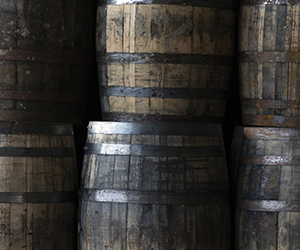
The silver lining: aged bourbon barrel prices have crashed. Eight-year Kentucky bourbon now trades at $2,200–$2,500 per barrel, down from $4,000 for a four-year barrel in 2022 — a dramatic reversal that signals real value is sitting on those shelves.
What this means for you: This is genuinely a buyer’s market right now. Bottles that were impossible to find two or three years ago are increasingly showing up at retail. If you’ve been waiting for a chance to stock up on quality bourbon at or near MSRP, this may be your window.
Four Roses Changes Hands — But Don’t Panic Yet
One of bourbon’s most beloved brands just changed owners. GALLO officially completed its acquisition of Four Roses from Japan’s Kirin Holdings on April 6, in a deal reportedly worth up to $775 million — a record price for a Kentucky bourbon distillery. The acquisition brings Four Roses back under US family ownership for the first time in 83 years and expands Gallo’s growing premium spirits footprint.
The reassuring news: Master Distiller Brent Elliott is staying on, the existing team is remaining in place, and Gallo has emphasized “continuity across liquid, production, traditions, and people.” The company stated it plans to invest in “increased consumer and trade engagement, innovation, and global expansion.”
What this means for you: No immediate changes to the liquid or lineup are expected. Over time, however, a new corporate parent — even a committed one — tends to bring pricing, portfolio, and distribution changes. Four Roses fans should watch whether the brand leans into its ten-recipe heritage or slowly shifts toward volume.
A $40 Bottle Just Won World’s Best Bourbon
Good news for anyone who’s tired of hunting ultra-premium bottles: the 2026 World Whiskies Awards named New Riff Bottled-in-Bond Kentucky Straight Bourbon the World’s Best Bourbon — and it retails for $40, with distribution in all 50 states. The bourbon uses a mash of 65% corn, 30% rye, and 5% malted barley, is aged a minimum of four years, bottled at 100 proof (50% ABV), and is not chill-filtered. It also took home Best Kentucky Bourbon in the same competition.
This is a notable statement at a time when the top end of bourbon pricing has pushed well past $100, $250, and even $12,500 (Eagle Rare 30 this April). A world-beating bottle at $40 from an independently owned craft distillery in Newport, Kentucky is exactly the kind of story the industry needs right now.
What this means for you: If you haven’t tried New Riff Bottled-in-Bond, it’s worth picking up immediately. Awards like this tend to cause temporary shelf demand spikes, so don’t sleep on it.
Japanese Whisky Gets a Quiet but Significant Comeback
On April 1, Nikka quietly marked Japanese Whisky Day with a meaningful announcement: the Miyagikyo Single Malt 10-Year-Old is returning to the UK market for the first time since 2016. It’s the first age-statement expression from Miyagikyo in almost a decade, available at a recommended retail price of £149 ($185) from select UK retailers. Asahi (Nikka’s parent) also launched the same bottling through international spirits trade channels the week of April 13–17, per Drinks Intelligence.
Meanwhile, Suntory’s 2026 Yamazaki and Hakushu releases continue their Story of the Distillery series with nature-inspired themes, keeping Japanese whisky’s premium narrative alive even as overall market enthusiasm has cooled slightly from its peak.
What this means for you: For Japanese whisky lovers in the US, import availability of Miyagikyo may be limited initially, but this is a signal that Japanese distilleries are opening up more age-statement bottlings as maturation stocks grow. UK availability is confirmed; watch for US allocation announcements from Nikka’s U.S. importer, Hotaling & Co.
Angel’s Envy Drops Its Biggest Release of the Year — At a Price
Angel’s Envy made two major announcements this month: the 2026 Cask Strength Bourbon (117.8 proof, 10 years, MSRP $249) and, for the first time, a 10-Year Cask Strength Rye (111.6 proof, MSRP $269). The rye in particular is noteworthy — it’s Angel’s Envy’s first age-dated rye at cask strength, and for fans of their rum barrel-finished style, this is essentially the ultimate expression of that profile.
Also landing in April: Blood Oath Pact No. 12 (finished in Italian Montepulciano and Sangiovese casks, $130), Jack Daniel’s 10, 12, and 14-Year-Old Tennessee batches ($90/$100/$150), and the staggeringly rare Eagle Rare 30 at $12,500.
What this means for you: The April release calendar is heavy on premium and ultra-premium expressions. If you’re hunting the Angel’s Envy cask strength releases, act quickly — these allocate fast. For more budget-conscious options, the Jack Daniel’s aged expressions continue to offer strong value relative to comparable competitors.
Analysis: What These Stories Are Really Telling Us
Taken together, this week’s whisky news points to a market in the middle of a significant structural reset — and it’s playing out differently depending on which category you follow.
The Scotch contraction is the most serious story in the room. Production pauses at Diageo’s Teaninich and Roseisle, the permanent closure of the Pencaitland maltings, the disappearance of independent bottlers like Chapter 7, and 15% volume export drops to the US add up to the most sustained supply-side contraction Scotland has seen in decades. The tariff environment has accelerated what would have been a slower adjustment. Consumers who have depended on a wide specialty shelf should expect narrower selection and gradually higher prices through 2026 and into 2027.
Bourbon is in a buyer’s market, but not a stable one. Record barrel inventories, collapsing secondary market prices, and a wave of new April releases at accessible MSRPs all favor the consumer in the short term. But the underlying demand story — younger generations drinking less, competition from cannabis and GLP-1 medications, export market headwinds — suggests this isn’t a quick correction. The brands that come out ahead will be those with loyal core audiences and strong on-premise presence, not those that relied on speculation and secondary market hype.
The Four Roses acquisition is a bellwether for industry consolidation. As bourbon demand softens and capital gets more expensive, family-held brands are increasingly accepting acquisition offers. Gallo’s move signals that well-capitalized beverage giants see depressed valuations as a buying opportunity. Expect more consolidation deals in the next 18–24 months, especially among mid-tier craft brands that expanded aggressively during the boom years and are now carrying too much inventory.
Japanese and premium Asian whisky is quietly repositioning. The return of Miyagikyo with an age statement, after nearly a decade without one, is a signal that Japanese producers now have enough aged stock to be more transparent about what’s in the bottle. This is a maturation of the category in the most literal sense — and for consumers, it means better-defined, more verifiable products replacing the NAS-heavy era that characterized Japanese whisky’s explosive growth period.
The through line across all of these stories: a global whisky industry that over-expanded during the pandemic boom is now reckoning with a hangover of excess inventory, tariff uncertainty, and shifting consumer habits. For collectors and enthusiasts, this environment creates real opportunity — access to better bottles at fairer prices. For the industry itself, the next 12 to 18 months will sort out who built something durable and who was simply riding the wave.
For the latest whisky news, listen to each week’s episode of WhiskyCast.
Editor’s note: This story was drafted using AI, and reviewed, revised, and edited by a human to WhiskyCast editorial standards.
Presenting Brand Partners
Brand Partners