


Stories
Whisky is a passion to explore. From the history of the spirit to the evolution of the industry, the story of whisky helps fuel that passion. Often, it’s easy to forget that whisky is also a global multibillion dollar industry. The stories of whisky — from news and new releases to in-depth inquires and what goes on behind the label — blend together to help us appreciate the spirit of whisky.
Japanese Whisky’s Age Statement Comeback Is the Most Important Shift in the Category in a Decade
Where This Started: The NAS Era and What Caused It
To understand why Nikka Miyagikyo’s return with a 10-year age statement is significant, you need to understand how it disappeared in the first place.
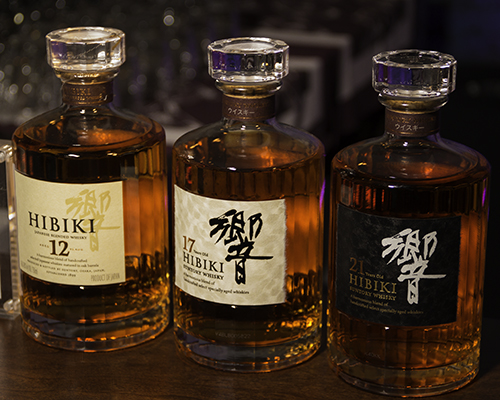
In 2015, Nikka sent a letter to its global importers that became known in whisky circles as “the Nikka Shock.” The company announced it was discontinuing its entire age-statement lineup — Yoichi 10, 12, 15, and 20; Miyagikyo 10, 12, and 15 — effective immediately. Suntory followed with similar moves: Hibiki 17 disappeared, Hakushu 12 disappeared, Yamazaki 12 became nearly impossible to find, and when you could find it, it was triple the original price. The culprit was a demand spike that nobody had planned for.
The chain of events is almost darkly comic in retrospect. Japanese whisky had been so unpopular in the 1990s and early 2000s that Nikka’s Yoichi and Miyagikyo distilleries were, in some years, laying down barrels that could literally be counted on one hand. Suntory’s flagship distilleries were reportedly running one day per week at their lowest point. Then Jim Murray named the Yamazaki Single Malt Sherry Cask 2013 his Whisky of the Year for 2015, and the category went from obscure to globally coveted almost overnight. A decade of near-zero production created a decade-long hole in the aging pipeline — and by the time demand exploded, there simply wasn’t enough mature stock to sell.
The NAS era was the industry’s survival mechanism: blend what you have, pull off the numbers, and buy time.
The Recovery Timeline
The question whisky enthusiasts have been asking since 2015 is: when do the stocks recover? The answer, it turns out, is now — and the Miyagikyo 10 is the clearest evidence yet.
Nikka actually began the age-statement return with Yoichi 10 in 2022, when Asahi (Nikka’s parent) announced it was bringing back Yoichi 10 after seven years without an age statement. At the time, it was released in limited quantities. The initial Miyagikyo 10 was announced in late 2025 with just 9,000 bottles for Japan and 9,000 for the international market — minuscule allocations that reflected cautious inventory management, not confident abundance.
The April 2026 UK launch of Miyagikyo 10 — now confirmed through premium spirits distributor Speciality Brands at £149 RRP — represents something different. This is Nikka committing the whisky to a formal Western market launch with a named distributor, a retail network, and a clear positioning. That requires confidence that there is enough mature stock to sustain ongoing commercial availability, not just drip limited editions.
Meanwhile, by 2025 both Suntory and Nikka had stabilized their core NAS ranges while selectively reintroducing age statements from replenished stocks, and a new wave of craft Japanese distilleries is beginning to put out their first mature expressions. The pipeline that emptied in the 2000s is refilling.
What You Can Actually Buy — And What It Costs
Here is the current state of Japanese age-statement availability, for consumers trying to navigate this:
| Expression | Age Statement | ABV | UK RRP | US Status |
| Miyagikyo 10 Year Old | 10 years | 45% | £149 (~$185) | Not yet confirmed |
| Yoichi 10 Year Old | 10 years | 45% | ~£150 | Limited US via importers |
| Yamazaki 12 Year Old | 12 years | 43% | ~£80 | Scarce, allocated |
| Hakushu 12 Year Old | 12 years | 43% | ~£80 | Scarce, allocated |
| Nikka From the Barrel | NAS | 51.4% | ~£45 | Available |
| Suntory Toki | NAS | 43% | ~$40 | Widely available |
The Miyagikyo 10 has no confirmed US availability as of this week. However, the 2026 launch was announced in 2025 and the international rollout through Speciality Brands in the UK typically precedes a US distribution arrangement with a partner importer. Given Nikka’s existing US distribution relationship through Hotaling & Co., it is reasonable to expect a US announcement within the next six to twelve months. The question is whether it arrives at or near the UK’s £149 price point — roughly $185 — or whether US importer margins and tariff dynamics push it higher.
For context: when the original Miyagikyo 10 sold in the UK before it was discontinued in 2015, it retailed for around £45. The relaunch at £149 reflects both a decade of premium repositioning and the genuine scarcity that comes with limited aged stock. It is not a gouging price. It is an accurate reflection of what ten-year-old Japanese single malt currently costs to produce and bring to market.
The Deeper Trend: What the Age Statement Return Actually Signals
The Miyagikyo comeback is not just good news for Japanese whisky fans. It signals a structural maturation of the entire category that carries three meaningful implications.
First, transparency is returning. The NAS era was characterized by a lack of verifiable information about what was in the bottle. Age statements create a floor of accountability — you know the youngest whisky in the blend. As more age statements come back, consumers regain a meaningful reference point for judging value. Brands that leaned on exotic NAS storytelling to justify premium pricing will face harder scrutiny.
Second, craft distilleries are starting to matter. Japan’s new-wave distilleries — including several that opened in the early-to-mid 2010s — are beginning to release expressions with enough maturation time to be called genuine whisky rather than new make or spirit drink. The Spirits Business reported in February 2026 that this new generation of producers is scaling up with increasing confidence. In the next five years, Japanese whisky drinkers will have genuine options beyond Suntory and Nikka for the first time in the modern era.
Third, the price ceiling is now set. Miyagikyo 10 at £149 establishes a reference point for what the market will accept for a verified, age-statement Japanese single malt from a legacy distillery. That’s a high ceiling — and it legitimizes the broader premium tier of Japanese whisky in a way that NAS bottlings, however good, never fully could. Expect Suntory to follow with more confident age-statement pricing on its expressions as Hakushu and Yamazaki stocks continue to recover.
What You Should Actually Do Right Now
If you’re a Japanese whisky drinker, here is a practical action list based on where the market sits today:
Don’t wait for the US Miyagikyo 10 launch to get comfortable with the category. Nikka From the Barrel is widely available, consistently excellent, and at 51.4% ABV provides a sense of the Japanese character without the premium price. If you haven’t tried it, start there, but keep in mind that it’s a “world whisky” blended from Nikka’s own whiskies with Scotch Whisky.
Follow the Yoichi 10 as a US benchmark. It returned to US availability a couple of years ahead of the Miyagikyo, and its market behavior — pricing, allocation levels, secondary market activity — will tell you what to expect when Miyagikyo arrives stateside.
Keep an eye on craft Japanese expressions. Several smaller Japanese distilleries have released their first whiskies with credible maturation this year. Forbes’ February 2026 roundup flagged a handful of genuinely interesting craft expressions that are reaching US specialty retailers. These are flying under the radar compared to Suntory and Nikka, and they are priced accordingly.
Expect the relaunch pricing to hold or increase, not come down. The £149 UK price for Miyagikyo 10 is not introductory. It reflects actual scarcity of mature stock. As production ramps and more aged whisky becomes available over the next five to seven years, prices may moderate slightly — but don’t expect Japanese age-statement whiskies to return to pre-2015 pricing. That window closed permanently when the category became globally recognized.
The NAS era was painful for enthusiasts who valued transparency. But it forced both producers and consumers to evaluate Japanese whisky on its flavor merits rather than the number on the label. The age statements coming back now carry that earned credibility with them. That’s not a bad place to start a new chapter.
Editor’s note: This story was produced using AI. However, it was reviewed, revised, and edited by a human in line with WhiskyCast editorial standards.
Presenting Brand Partners
Brand Partners